
Of 'Goodness, Gracious Great Balls of...'
13th October 2019
Er - Balls.
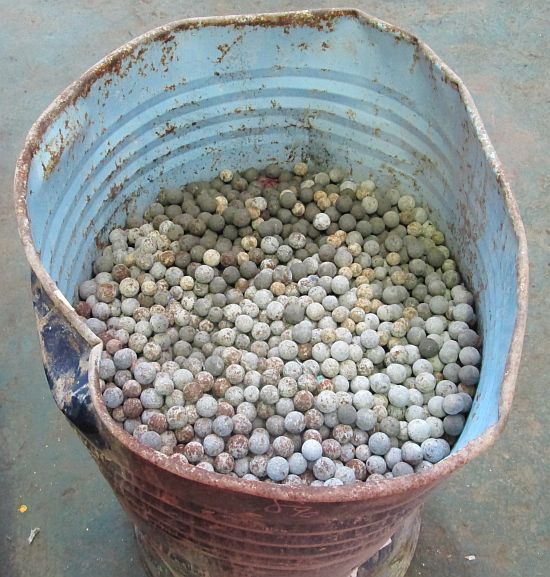
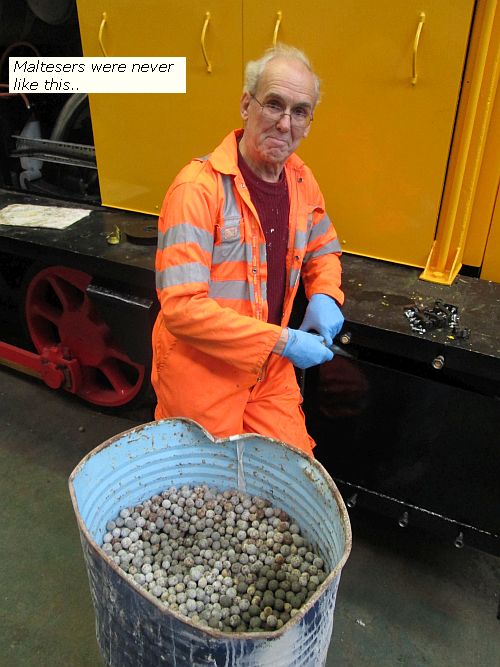
Yes, Andy and I arrived at Tunstead on Monday to find no apprentices but a 45 gallon oil drum loaded with a ton or so of Mill Balls. I had also brought along spacer plates for the door catches but quite rightly Andy insisted on getting these primed (at least) before fitting them so with that accomplished, we considered how to load roughly equal amounts of balls into two opposite sides of the loco. Obviously a logical, consistent approach would have been to determine the level of the balls in the drum, mark the drum's outside with that level, and add an additional mark at half way up. Then load balls into one side of the loco until the internal level reached our estimated half way mark and move the drum to the other side of the loco.
Stuff that, I picked up a piece of redundant coolant pipe and started rolling balls into the nearside box. Then Andy had some inpsiration, and returned with some long lengths of cardboard that had been formed into right-angles to act as protection packaging for the corners of something. With these and some masking tape a runway was created which rolled the balls across the front of the loco, and down onto an inclined runway that reversed the balls and despatched them through a hole into the opposite side box. Get the idea?
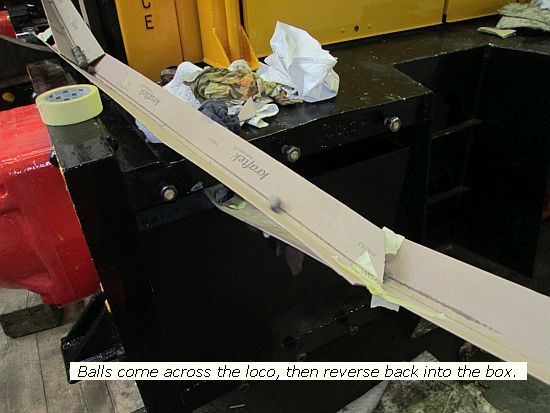
Well here's a still, and hopefully, at the end you'll find an MP4 file to download and watch the contraption in action. Now I must admit to being a little jealous: there was I solemnly rolling balls down my coolant pipe into the right hand box, and Andy was having way more entertainment setting balls rolling down the runway, watching them drop onto the farthest (uphill) section, decelerate then come back down the card and drop with a resounding clank into the left side box. I could, I surmised, get far more bpm (balls per minute) with my coolant pipe but it was utilitarian, functional. Andy's had the finesse of fun as well as saving the effort of moving a half-full drum over to the other side without summoning a forklift. Not all these balls were round, incidentally. A few were cracked and split in two as we handled them, a few were simply ovoid and some unfortunate ones had severe dents in one facet as though having been deformed by coming into contact with another, tougher specimen. Small balls on Andy's track rolled slower than large ones and if overhauled by one in the rear the two would stop for a consultation and block the way for others behind. When this occurred Andy had to leave launch control to sort out the jam, and I would nip in and despatch a few more in his absence.
You may guess from all this that the morning flew by and by lunchtime all the balls had been transferred into the two boxes with - so far as we could judge - roughly equal volumes. The two cover plates were replaced for now.
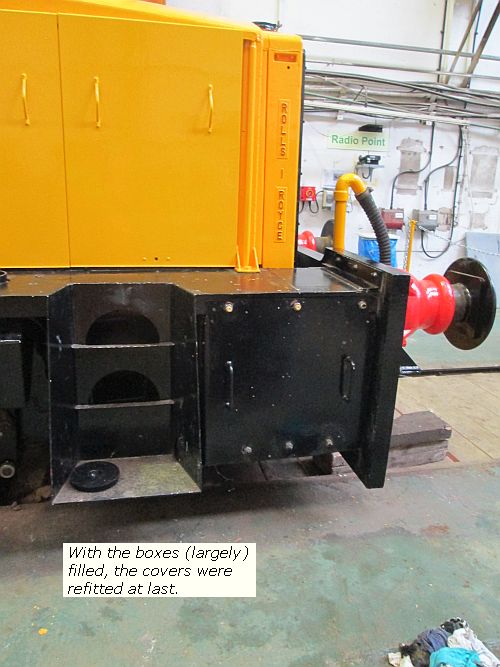
Once the loco has shunted a bit, we suspect the balls will have found a more equal level within their new homes and we can add some sealing material (concrete seems to be a contender) to ensure it all stays put. I had to be back early in order to finish getting a loco ready for despatch, so left Andy painting the walkways, etc with a fresh coat of black.
Over the last few weeks, Andrew has been sourcing some crane rail for use on my trailer. Now, I always thought that crane rail was what I (and any other fan of the Welsh slate quarry tramways) would identify a 'bridge rail' because in section it looks like a humped back bridge with wide flat flanges at each side. Andrew assured me that this was no longer made, and referred me to rail sections that look like flat bottom rail that someone squashed down until the vertical web has all but disappeared. Apparently it is a DIN (German) standard but widely used and, of course, even rolled in China. He got a quote from a local firm using the rail refrences (A45 or A55) and I paid the invoice. On Thursday one of our friendly hauliers collected it for us and arrived with - bridge rail. Looks like we're going to have to get the haulier in again.
Saturday, and I was doing some paperwork in the morning but was in the shed for the afternoon with Andrew. I was sorting out a commercial job, but Andrew was back on Ashdown's rear casing, though he did break off to fire up Ludwig Mond in order to clear the front of the shed and get the forklift out for a quick lift.
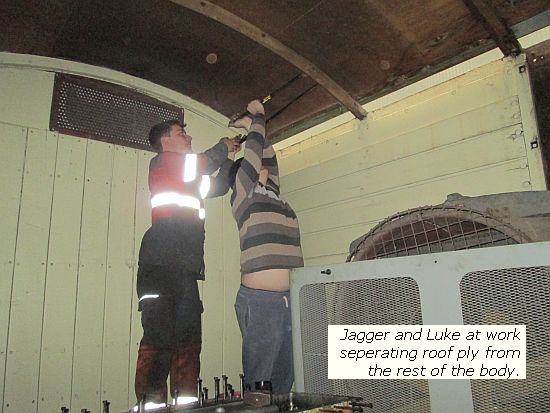
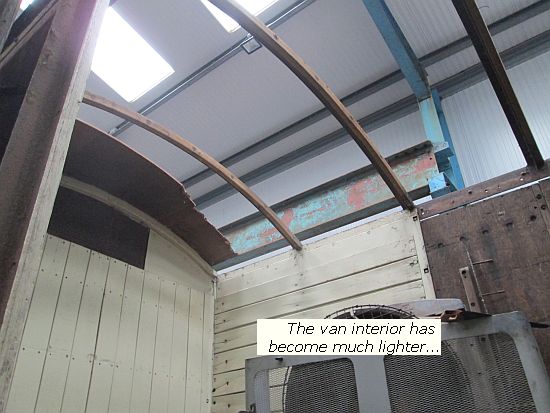
Today however not only was Andrew on site, but Jagger and Luke too, and we set them to work stripping off the roof of the box van.
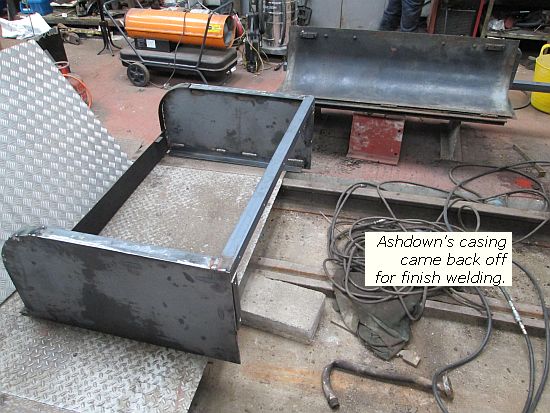
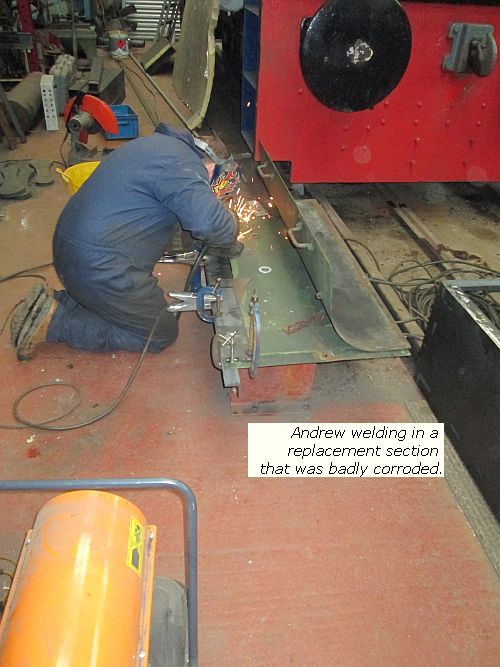
Andrew was finishing welding up the rear casing section that fits over the transmission of Ashdown, though he did also weld up the little box that came out of RS8's cab.
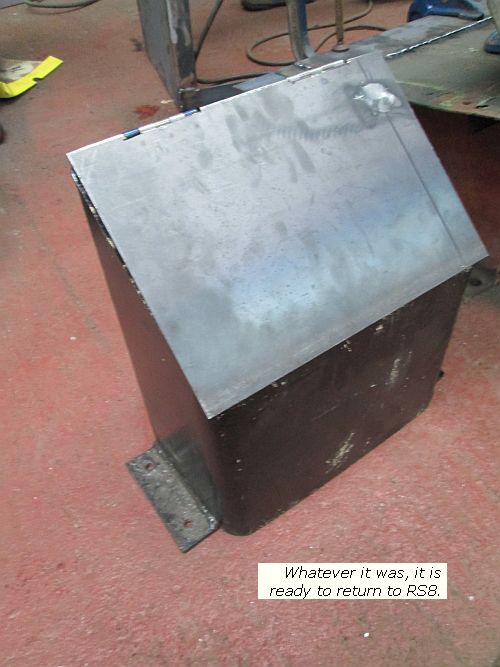
What this was for is unclear- indeed, it seems to have eluded being photographed in the months following the loco's arrival at Darley Dale, but it has a lid re-created and is now ready to return to the cab floor.
Towards the end of the afternoon Ashdown was taken back out and after some trouble, started up and run up and down the yard to see how the transmission was performing.
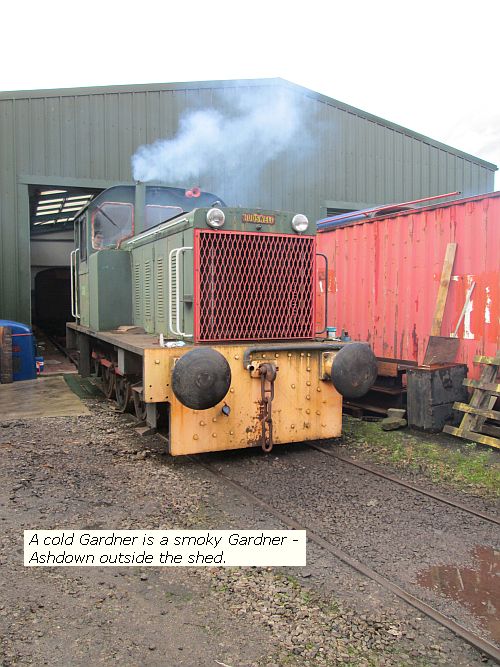
Andrew reported the traction clutch needs a bit more adjustment and an air valve occasionally sticks, but other than that appears to be well on the way to functioning correctly. The engine smokes - well Gardners tend to and especially when they've been sat out of use for quite some time - but that improved rapidly as the engine gained heat into the block. Oh, and he's told me that I will have to design up that exhauster installation for him: Oh joy.
Download the file below to see the Andy H Mill Balls Run in action...