
Of concrete and rollers
17th November 2019
You may have noticed that it has been raining rather a lot this week. No, no more flooding photos, but getting out and doing things has been somewhat impaired by precipitation all the time. And a visitor today told me that the flood warning for the Derwent basically showed anywhere in the valley west of the railway.
I said that last week's visit to Tunstead had a bit of an end-of-term feel and that continued on Monday. There are loads of little jobs that have been put off as 'not being important at the moment' that must now be addressed. When RS8 trundled back into the building last month it left a few trickles of oil and since the axleboxes don't appear to be leaking it was likely that the labyrinth seals on the RF25 gearbox weren't sealing adequately. Labyrinth seals are essentially a succession of grooves pumped full of grease which succeeds in resisting the urge of the oil to escape to the outside world. We charged the labyrinths with grease a long time ago but maybe the grease didn't fill all the passages so I went underneath and pumped a load more in to each of the 4 grease nipples on each side.
Actiually, I still don't know whether we have sufficient oil in there. Although I measured up an RF25 dipstick at Wirksworth weeks ago, have the neccessary rod in stock and drew up a knob, my friendly local machinist still hasn't got around to finishing it (or if they have, they've forgotten to tell me it's ready) so I may have to improvise. Anyway, while under there I checked the axlebox oil levels (they each have a little dipstick) and greased up brake rigging parts, spring pillars, side rod bearings and finally buffer shanks, so RS8 is pretty well good to go.
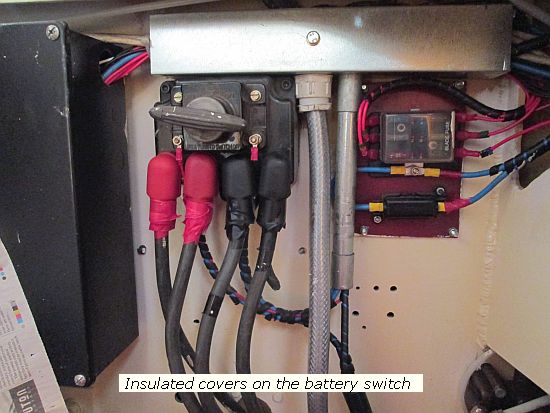
A customer has complained that I don't put covers over the main cables on battery switches. I'd wanted to but the old soft rubber ones made by CAV disappeared years ago and I hadn't found anything remotely suitable. After buying several different manufacturers' samples of late, I had a batch which, if not perfect, are at least a fairly good substitute so brought a set up for RS8 and fitted them.
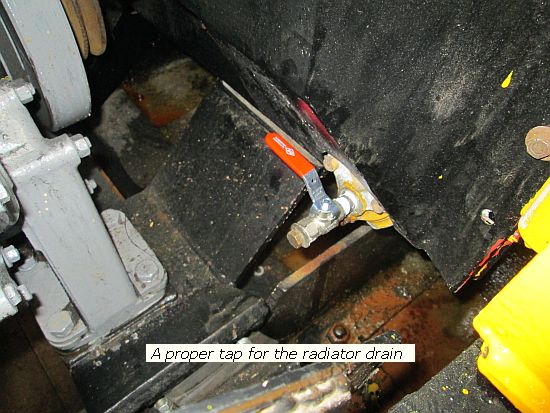
Back at the battery box the clamp bolts were fitted with special washers (actually left-over roofing screws ones) and the revised radiator drain tap was installed, which left Andy clear to fill the system with 50/50 anti-freeze /water. We kept a further close eye on the radiator level and the sump oil in case the latter suddenly turned a bit blue, but so far - touch wood- all is well.
The windows received a visit from a glass cleaning chemical and clean rags. They weren't bad, but there were felt pen inscriptions at the corners to record which was which and marks from the vacuum cups he'd used when the glazier fitted them. Now they are all clear.
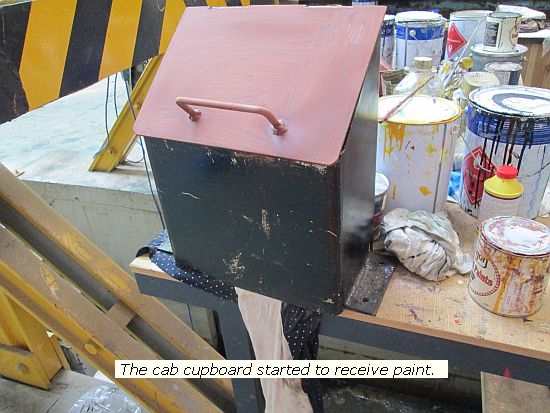
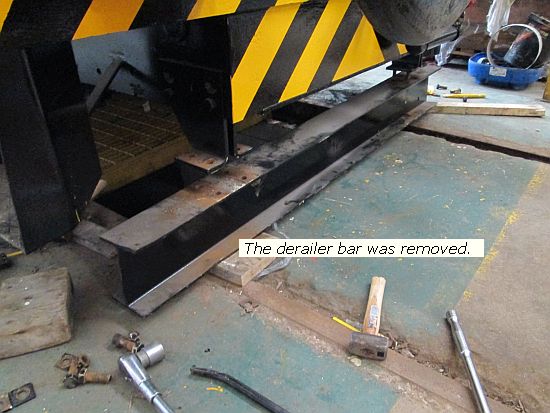
Andy took the repaired cupboard/box thing and gave the lid a preliminary coat of primer, and together armed with sockets and breaker bar, we attacked the derailment beam at the rear and got it off: it is far too near the rail not to interfere when we try to ramp it onto the low loader.
Finally we started to take stock of bits that need to stay and others that can come back to Darley, and the van departed with considerably more than it had arrived with as the 'tidy-up behind ourselves' gets under way.
Having had to postpone concrete pouring from last week owing to weather and a breakdown, at one point it looked like this week would fail too, as our allotted time on Wednesday passed by without any lorry showing up. Then it was going to be first thing Thursday, then finally OK for about half-past three and as the daylight faded, some 3 cubic metres of C30 were laid into the trench and covered over with DPM to protect it from frost.
I was first down on Saturday and received a surprise: the nearside track was also flooded. This hasn't happened in a long time and is a bit of a mystery. The rails (flangeways) at the Matlock end are not blocked up with sand as we have always done on the eastern side (which is still flooded as you know) but to have flowed in that way would have probably meant more water in the eastern track (Track B in our parlance) which hasn't happened. One possibility is that there is a break somewhere within our DPM under the concrete and the water table has simply found itself high enough to penetrate it. Andrew arrived with a drill-powered pump which we will have to set up for draining both tracks soon. The rain put us off pulling the DPM back to inspect the result of the concreting outside and instead I cut pieces of pipe and channel for my rail roller while Andrew resumed tidying up generally, plus rebuilding the jockey pulley assembly for Ludwig Mond.
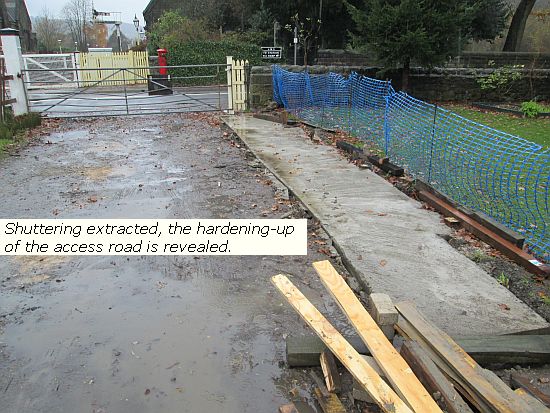
Today I was down for 10 o'clock and as the rain wasn't excessive decided it was time to do the great reveal. Jagger and Luke arrived shortly after and gave me a hand removing the DPM, the supports that had prevented the DPM getting stuck to the concrete and the shuttering from around the concrete itself. All this before even a cuppa. Then Andrew and Tony S arrived and the workshop became a hive of activity. Tony stripped all the copper from the armature of the generator that had come attached to what is now RS8's engine. (You follow all of that?). Andrew after some more sorting/tidying cracked on with some welding. Jagger and Luke, after starting a bonfire in the rain, took the jockey pulley assembly and fitted it in to Ludwig, so the loco was started up and run for a half hour or so to blow warm(ish) air through the traction motors. (The jockey pulley was for the traction motor blower).
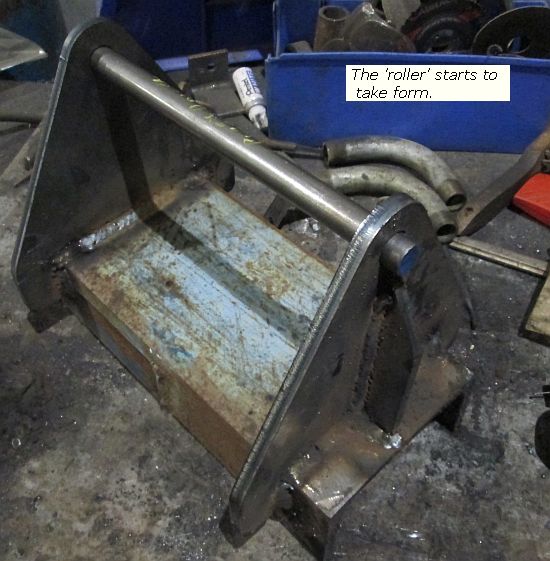
On his fabrication bench Andrew put together my rail roller. This is to see if we can make assembling and disassembling the ramps easier by using a roller rather than brute strength and rail tongs. Unfortunately I'd picked up the wrong bearings so it's not quite finished yet.
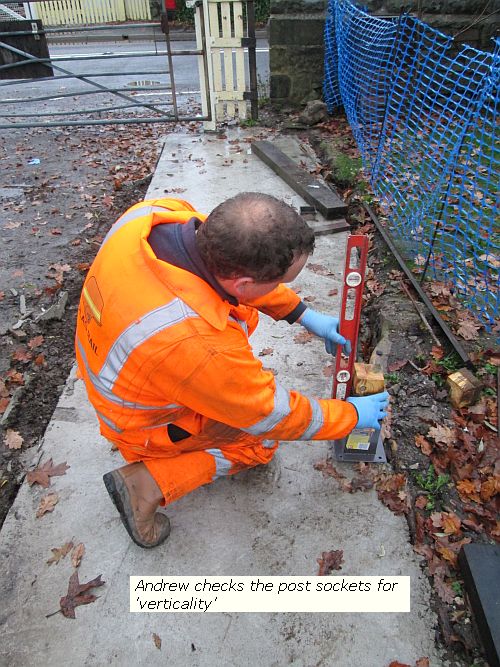
During a break in the weather, Andrew dragged me out with a sprit level and we checked whether the sockets cast into the concrete to accept the fence posts were still relatively vertical, or whether the weight of concrete had shifted them. One is rather proud of the surrounding concrete and will need to be trimmed, but all, while not perfect, are sufficiently near to be acceptable. Back inside Andrew decided to commandeer the air line and temporarily hook up the shot blast cabinet for a trial run. If you are not a regular reader you will know little of this: it has stood in one corner for many months after being bought off an e-bay seller. We received much advice from a reader in nearby Wessington but did nothing about it. Today, on a whim - well I suppose a little more pre-meditated as he'd arrived with a tub of grit from Machine Mart - he proceeded to shot blast a couple of bits for evaluation. As forecast, we need some sort of dust extraction for it to work properly, but it apparently shows much promise.
Which about brings us to the end of this week's instalment. What's in store for this week? Well, more winding down at Tunstead, a wagon due to arrive and bits to go, a bit of fence-building perhaps: yeah, there should be something worth writing about. See ya then.